Las Palmas Brayan Alvear - Guanabana Washed Caturra - Colombia
Las Palmas Brayan Alvear - Guanabana Washed Caturra - Colombia
Couldn't load pickup availability
Ships directly from Moonwake Coffee Roasters, roasted fresh every Tuesday and shipped Wednesday. US delivery is typically 2–6 business days. Orders with coffees from more than one roaster arrive as separate boxes. Shipping & freshness →
?
Tasting Notes
Specific flavors and aromas the roaster (or our team) noticed when cupping this coffee. They describe the brewed cup, not flavorings added to the beans.
Read more in the glossary →-
Roast Level
?
Roast Level
How dark the beans are roasted, on a 'specialty' scale where Light/Ultralight preserves the most origin character.
Read more in the glossary → - Specialty Light/Ultralight
-
Flavor Profile
?
Flavor Profile
High-level flavor families this coffee leans toward — fruity, floral, sweet, chocolate/nutty, spicy, tea/botanical, or fermented/wine-like.
Read more in the glossary → - Fruity, Sweet
-
Origin Type
?
Coffee Type
Whether a coffee is a single origin (from one farm, region, or country) or a blend (multiple origins combined).
Read more in the glossary → - Single Origin
-
Flavor Notes
?
Flavor Notes (SCA)
More specific flavor families inside the broader profile, using the SCA Coffee Taster's Flavor Wheel — e.g. 'Citrus' and 'Berry' inside 'Fruity'.
Read more in the glossary → - Tropical, Other Sweet
-
Caffeine
?
Caffeine
Whether this coffee is caffeinated or decaffeinated, and (for decaf) which process was used.
Read more in the glossary → - Caffeinated
-
Country of Origin
?
Country of Origin
Where in the world this coffee was grown, or 'Multiple' for a blend with beans from more than one country.
Read more in the glossary → - Colombia
-
Process Type
?
Processing
How the coffee cherry was prepared after picking — dried with or without its fruit, fermented under specific conditions, etc. Big effect on the final cup.
Read more in the glossary → - Co-fermented
Whole Bean
Roast: Light
Recommended Rest: 2-3 weeks from roast date
Tasting Notes: piña colada, pink laffy taffy, cherimoya
Origin Details
Region: Huila, Colombia
Elevation: 1600masl
Producer: Brayan Alvear, Las Palmas
Process: Guanabana Washed
Variety: Caturra
ABOUT THIS COFFEE AND PRODUCER
Brayan Alvear is a fourth-generation coffee producer from Huila, Colombia, who leads Finca Las Palmas with a strong focus on innovation and precision in post-harvest processing. With more than 18 years of experience in coffee production, he has combined his family’s traditional farming knowledge with a scientific approach to fermentation, constantly experimenting with variables like temperature, time, and microbial cultures to achieve distinct flavor expressions. Under his leadership, Las Palmas has become known for producing clean, expressive, and consistent cup profiles. Bryan works with several varieties, including Bourbon Chiroso, Pink Bourbon, and Sidra.
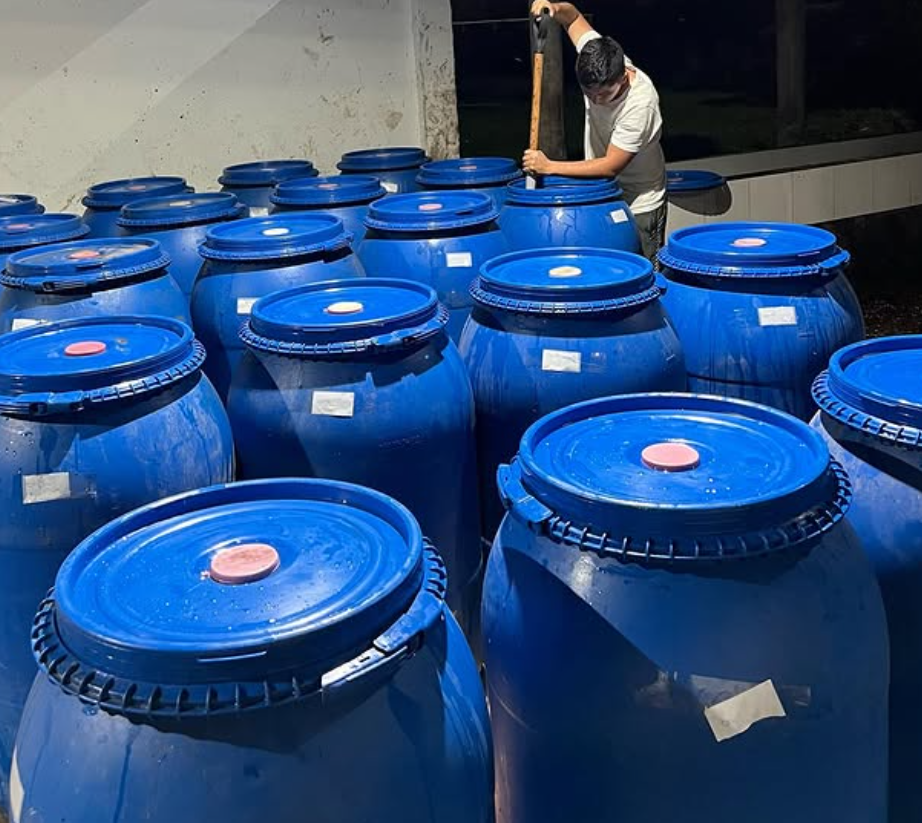
This Caturra begins with the selective harvesting of cherries at peak ripeness, followed by flotation to remove sticks, impurities, and underdeveloped fruit. The cherries are then placed in sealed tanks for 36 hours to initiate controlled oxidation. After this stage, the coffee is dry pulped, and the parchment with mucilage undergoes a second 36-hour fermentation in plastic tanks. During this phase, leachate (coffee must) from a previous batch is introduced to enhance microbial activity. Accelerated fermentation takes place during the first 12 hours, using a mother culture of microorganisms combined with panela and molasses, creating stable conditions for fermentation. The mother culture is then reintroduced, this time blended with guanabana and applied in two stages over an additional 36-hour fermentation. This step allows the beans to absorb a round, lactic fruit character while maintaining clarity in the cup. After fermentation, the coffee is rinsed and sun-dried on patios for 10 to 15 days.
WHY WE SELECTED THIS COFFEE
Maybe our most fun cofermented coffee yet.
This one went through a multistage fermentation using mossto, panela and guanabana (soursop). Each step adds something different, and it comes through in the cup as a soft, almost milky texture with a layered candy sweetness.
There’s a lot of tropical fruit here. Pineapple and cherimoya come through first, then it settles into something rounder and a little more candy-like. It kind of lands somewhere between a piña colada and pink chewy Laffy Taffy.
For a coferment, it's surprisingly balanced - meeting our requirement. It is very much in that fun expressive lane that makes you smile in disbelief. Perhaps a new staple? Let us know what you think.